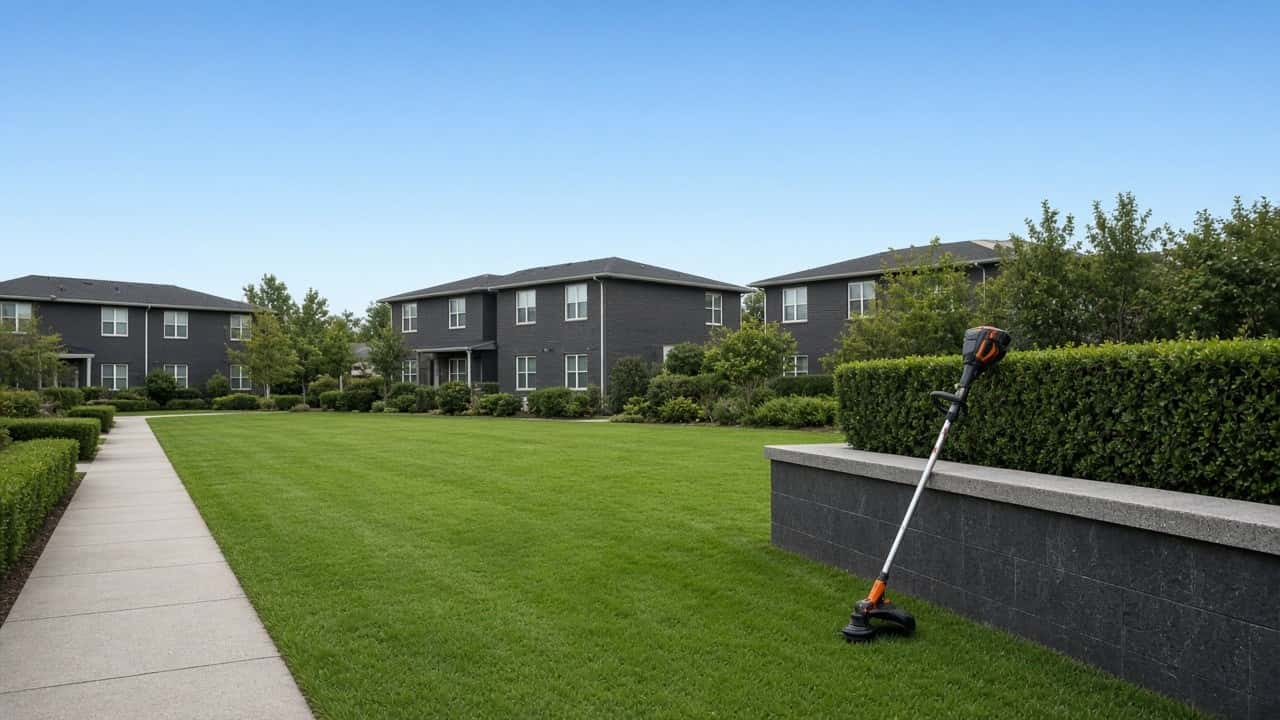
You land a meeting with an apartment complex. You want to stand out, so you think about everything you could offer: seasonal flowers, bush trimming, irrigation checks, mulch. Maybe a subcontractor will do part of the work. But the property manager isn't asking about extras. They want to know what they're getting every week and who picks up the phone when something's wrong. How do you write a commercial proposal they'll say yes to?
Before you price anything, spell out the work. Which areas you'll service. How often you'll be there. What's included on every visit, like mowing, trimming, edging, and blowing off walks. What's not included. Which seasonal work happens and when.
A manager comparing proposals wants to see exactly what they're paying for. A clear scope also protects you. "I thought weeding the beds was part of it" is hard to argue when the proposal says it isn't.
If a sub is doing some of the work, have them price the same written scope before you put a number on it. Then you both know the job.
Before you pitch the mulch and the flowers, write down exactly what you'll do and how often.
Commercial customers care about response as much as the mowing. Put it in the proposal. Who do they call when a tenant complains? How fast will you respond? What happens if your sub can't make it that week?
If you're subbing the work, the answer is still you. The property manager hired your company, so the complaint is yours to handle. Decide how you'll do that before you sign, not when the first call comes in.
Price the work you wrote down so it pays you and your crew, even if someone else bids lower. Some owners lowball to win the contract and plan to make it up with add-ons later. That rarely works. The low number becomes the ceiling, and the add-ons never cover the gap.
Once the scope is priced to make money, extras like mulch or irrigation checks stop being desperation sales and become icing on the cake.
Write the scope down, own the response, and price it to profit. That's what keeps a commercial account worth having.